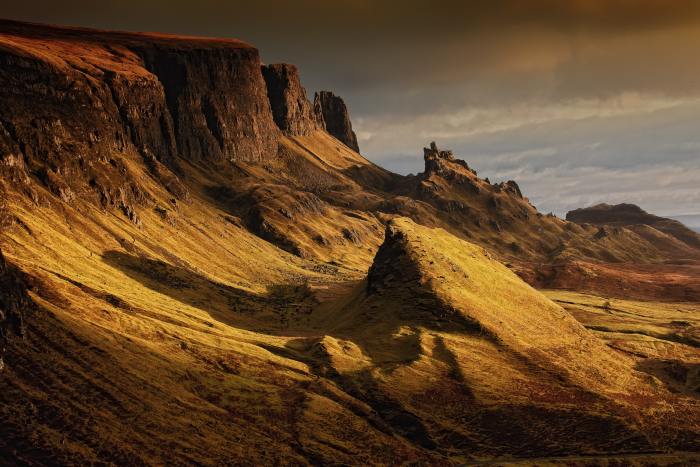
Our Conflict with the Wilderness

highlands-highlands-and-islands-isle-of-skye-45888
Photo by Pixabay from Pexels

I am not sure what comes to your mind when you read the word “wilderness,” but most of us will not put it on our “bucket list” of places we want to be certain to visit in our lifetime. It won’t likely show up in the listing of top vacation spots on most travel websites either.

A dictionary definition of “wilderness” uses these words: “an uncultivated, uninhabited, and inhospitable region; a neglected or abandoned area of a garden or town.”

That doesn’t sound very appealing. Many of us have not visited a region known as “wilderness” for those reasons and more, but many of us have described seasons of our lives where it felt as if we were in a “wilderness.”

adventure-arid-arizona-414136
Photo by Pixabay from Pexels

Such seasons can come from a crisis of some variety that plunges us into a sense of isolation, hopelessness, and emptiness. Some of those seasons come when we have turned our backs on the Lord through commission or omission. Depression and anxiety can feel like a wilderness as well.

If we can avoid anything remotely connected to “wilderness,” most of us will do us unless we are one of those “off the beaten path” types eager for such vacation adventures offered.

Reading the Old Testament gives us a number of very vivid pictures of the wilderness. There is the story of Hagar after Sarah forces her to leave with Ishmael. Moses initially flees there after killing an Egyptian and of course the children of Israel’s route to the Promised Land goes right through the wilderness (actually a series of wilderness places – Mt. Sinai, Paran, Moab), but there are others as well such as when David flees there when Saul is out to take his life.

Jenny Phillips in an article for the American Bible Society offers an insightful view of wilderness in the Bible:

“The wilderness of the Bible is a liminal space—an in-between place where ordinary life is suspended, identity shifts, and new possibilities emerge. Through the experiences of the Israelites in exile, we learn that while the Biblical wilderness is a place of danger, temptation and chaos, it is also a place for solitude, nourishment, and revelation from God. These themes emerge again in Jesus’ journey into the wilderness, tying his identity to that of his Hebrew ancestors.”

One of my favorite descriptions of Jesus being led into the wilderness or desert is found in Ken Gire’s exceptional book, Moments with the Savior: A Devotional Life of Christ:

“It stretches before him like an endless wasteland, frayed with gullies, littered with splintered rock and sun-bleached bones. Stoop-shouldered hills are hunched all around him. At his feet, impoverished plants reach skyward, like beggars desperate for alms. But the eyes of heaven are unsympathetic. They offer no tears. Only the compensatory promise of night.”

That physical place might not be in your experience, but the feeling of such a place may be one you are acquainted with or perhaps know now.

clouds-dawn-desert-149941
Photo by Flickr from Pexels

It seems impossible for us to consider other aspects of these very stories when we are in the midst of such a time. We forget that God provided for Hagar and Moses in their first wilderness experiences with Him.

We forget when the children of Israel were out there in the wilderness complaining about the food, water, and accommodations that God was in their midst.

The Tabernacle was located in the very center of their encampment with the Levites encircling this holy place.

We forget that God sheltered David and his mighty men in the caves of the wilderness.

Our conflict with the wilderness is evident in all this. None of us wants to be there and yet there is testimony about the good that is accomplished in us when we are there and as a result of that season.

We grapple with the evidence that God led Jesus into the wilderness. He led the children of Israel into the wilderness. On our worst days we can be tempted to question how a loving God could do that.

One thing is also clear: In the wilderness God ultimately gets our attention.

Everything and everyone else has been stripped away so all that dulls our eyes to see Him cannot distract us or muffle our ears to hear Him.

Jenny Phillips notes in her article on the wilderness that being there has a number of functions:

“It serves as a place of barrenness and hunger, a source of nourishment from God, a location for God’s testing and revelation, and a context for the transformation for God’s people.”

The conflict within us about the wilderness reaches a peak when we face the question central to the experience: “Do I trust you, Lord?”

Our response will determine the outcome.

Our choice transforms our character.

4k-wallpaper-astronomy-constellation-1229042

Who, But God?

IMG_1551

As I look at the swirl of tragic news filling every means of reporting, I am reminded of the warfare in it all. I can be tempted to agree with those who lay blame to all the technological advances that pour all of this news out without sifting much of it for truth or a need to be shared. I can also be tempted to see the ways it can be used for so many negative and harmful things.

I look at the Internet and how it is used to dull our minds with its endless rabbit trails as well as how it can seduce us and take us away from our values and beliefs. I see how it can trap anyone into relationships and entities that are dangerous, unsafe, and evil. I see as well how it can be used to allow those who are intent on evil to communicate and achieve their ends of death and destruction on innocent people who are just going along doing life.

All of it seems to heighten my awareness of the power we give over to this invention and the enemy’s blatant use of it.

Over and over I hear the cry to unplug from all the devices we have that pull us toward these things. It’s true there are important boundaries that must be set for our children and us as well. But recently as I was reading several posts from other bloggers that offered encouragement, calls to prayer, exhortations to community and the Word, I felt as though the Lord gave me another view that many of us are missing.

Photo by Pixabay

The Lord has prompted so many to create websites and write or blog with messages of hope, testimonies of grace, calls toward enhancing our spiritual lives, and deepen our walk with Him. We do it as we feel led or have time. We take the risk of the criticism and misunderstanding.

We step out into thin air and share reflections and truths the Lord has worked into our own hearts and lives. When we are real, we confess to our venerable feelings about the risks we take to share and put our lives and hearts “out there” to the possibility of being misunderstood and judged. We acknowledge how inadequate we can often feel as well as the fear that can creep in when we take such risks.

Will anyone read it? What will those who know me think? What about people who have no idea of who I am, read it, and reach conclusions far from the truth? (Am I reading some of your minds?)

If that resonates with you, what I want you to hear and see that connects with the photo is that the Lord also has given me a glimpse of how He is using us to provide a network of little lights encircling the world.

Earth from Space, earthobservatory.nasa.gov

Who but God could create a stealth network of His children using the very tools that the enemy believes are his domain to spread light, truth, and hope to the world weighed down with so much?

We are His witnesses. 

He calls us to be light!

We write from far-reaching places. We sit with computers in large cities and small, in apartments and homes, in different states, on different continents. We sit in the midst of our own lives in whatever season we are in and the Lord births in us those words that show up on our screen. We can doubt their worth and much of it can be simply our own reflecting, but I think He is still the author and we are His testimony.

We have no real certainty how our readers find us despite a foggy idea perhaps about search engines and various classes and courses on blogging and marketing. We sometimes can be tempted to forget it all, but there is a call in us, a passion in us that keeps whispering and nudging us even on days we may feel we have nothing to say or nothing that others would find worth reading.

I think when the Lord gave me this picture of us, He wanted me to debunk all those lies and remind you and myself that He is in this. As we offer ourselves to Him in what we share, we lay it in His hands for his use.

We may never know how, where, or with whom He uses it, but after all is said and done it was always about Him anyway and the call and gifts He placed in us that we acted on despite those who may have caused us to doubt we could or should.

God has a habit of using unknown people in ways that astounds those whose fame is well known.

God has agents of His own spreading the truth of His gospel as “light bearers”.

And so, I can be content and humbled that we are a stealth army, a force for His kingdom and His purposes using the very devises the enemy believes he owns.

IMG_1552
n

Are You Listening?

Photo by Andrea Piacquadio from Pexels


Few skills that we are born with are as difficult to hone and develop as that of listening. Despite God giving us two ears to hear we often don’t want to listen. If we really do want to listen, we often don’t do it very well in the midst of our own thoughts that distract us.

Listening done well means that we need to set aside our self-focus, our biases and more in order to listen to not only the words of someone else but also what they are desiring that we understand as a result of those very words. To do it well takes practice and a bit of work because it is not just a physical skill set accomplished by the hearing organs of the body.

Even if we have never been a parent most of us can recall well our own parents urging us to listen to directions, reminders or admonitions they gave us. If they were especially important, a reminder about listening would always be attached to the rest of the information we were given.

Beyond our parents, teachers, coaches, and mentors, the Bible commands us to listen. Clearly, it points to its importance not just to provoke obedience but also as a way to demonstrate our love for someone else.

“A wise person will hear and increase in learning, And a person of understanding will acquire wise counsel,”

Proverbs 1:5 (NASB)
Photo by C Technical from Pexels


We listen in order to learn, to gain understanding, to know the heart and mind of another person, and also for the enjoyment it brings us in communicating with others or listening to our favorite music, it’s truly hearing. Not only is it wisdom to hear and listen, consequences of not doing so are spelled out in many ways beyond the pleasure of parents and teachers or how well we handle our assigned tasks.

“One who gives an answer before he hears, It is foolishness and shame to him.”

Proverbs 18:13 (NASB)

Consider one more thing that may not have crossed your mind about listening as Eugene Peterson points out as he writes about The Revelation of John:

“Listening is a spiritual act far more than an acoustical function. Expensive and sophisticated amplification equipment does not improve listening, it only makes hearing possible. Because listening so frequently decays into mere hearing, and because there can be no church apart from listening, the last word spoken to every church is “He who has an ear, let him hear what the Spirit says to the churches.”

Eugene Peterson in Reversed Thunder

This last book in the Bible reminds us within the first few verses how significant hearing and listening really are when we are urged to not only read the words John has been given to write but also read them aloud.

“Blessed is the one who reads aloud the words of this prophecy, and blessed are those who hear, and who keep what is written in it, for the time is near.”

Revelation 1:3 (ESV)

It seems likely the act of listening well will nearly always involve us in warfare that requires us to battle against all the forces within and outside of us that would be obstacles to the art of listening beyond simply hearing what is being said. Never is this more true than with scripture.

“If the divine word is primary, then human hearing is essential: that we hear is required; the way we hear is significant.”

Eugene Peterson in Reversed Thunder

And the way we hear is a personal responsibility. No one can do it for us. We are reminded of that in the Gospels of Matthew, Mark, and Luke as each tells the Parable of the Sower that ends with the words: “He who has ears to hear, let him hear.”

Little wonder that from the beginning to the end of the Bible this theme of hearing, listening, and responding is put before each one of us. Therefore, the quality of our hearing should matter to us.

“What is the quality of my hearing? Are my ears thick with callouses, impenetrable like a heavily trafficked path? Are my ears only superficially attentive like rocky ground in which everything germinates but nothing takes root? Are my ears like an indiscriminate weed patch in which the noisy and repetitive take up all the space without regard for the truth, quality, beauty, or fruitfulness? Or are my ears good soil which readily receives God’s word, well tilled to welcome deep roots, to discriminately choose God’s word and reject the lies of the world, to accept high responsibility for protecting and practicing the gift of hearing in silence, reverence, and attentiveness so that God’s word will be heard, understood, and believed?”

Eugene Peterson in Reversed Thunder

The choice is one for each of us to make and so is the responsibility.

Photo by PhotoMIX Company from Pexels


What Are You Imagining?

Photo of Boom Lake, Alberta, Canada by Pam Ecrement

As I write this, we have a frigid temperature of 9 degrees outside and inches of snow on the ground. Being outdoors is not a good option or very appealing and this morning I have been imagining another place that is a favorite of ours.

When my husband and I were still working one of the things we most needed on vacation was a place that refreshed and nourished us after spending many hours each week as Licensed Professional Clinical Counselors and Marriage and Family Therapists. We needed something that quieted our hearts and minds and stirred our imaginations again.

One of several places became favorites for us and we were blessed to visit it multiple times – the Lake Louise area of Alberta, Canada. We learned about the area when our daughter and her husband spent their honeymoon there. We had traveled in the continental United States to many different spots but one of our favorites had been the Rocky Mountains from Colorado to Montana. The vistas and grandeur never failed to inspire us and fill us with awe for the One who spoke them into existence. So, we chose to venture a bit farther north after learning about the area that had been their honeymoon spot. What we discovered stirred us to return many times and today my memory was stirred to imagining another trip there.

We explored more than a few trails and stunning spots while there, but our server at the restaurant of the hotel where we were staying gave us a tip about an out-of-the-way lake that was more off the beaten path of vacationers. One day at breakfast he gave us a map of how to get there and explained it would be about an hour or so hike from the parking area. His offer to have the chef pack a lunch made the trek even more appealing and I still recall that first time we made the trek to Boom Lake together.

Photo by Pam Ecrement

Along the path we discovered there were sights near our feet as well as above and around us. Despite the rocky terrain wildflowers were tucked in here and there adding spots of color – God’s little surprises in the midst of granite.

Sharing stories and things about books we were reading on the vacation kept us company on the hike back to Boom Lake, but we were likely to take much more than an hour so as not to miss the beauty that surrounded us and nestled near our feet. These delights have been the substance of memories and imagination long after we visited them.

What fuels your imagination?

There can be many sources and our choice of what we take in will tend to keep us in darkness or nudge us back into the light. The choice will fuel our fear and anxiety or nourish our faith and hope.

“Much of life is spent in darkness, whether literal or metaphorical. No one seems completely at home in the dark, even though most of us learn to accustom ourselves to it. We invent devices to make the dark less threatening – a candle, a fire, a flashlight, a lamp. In the darkness we are liable to lose perspective and proportion: nightmares terrorize us, fears paralyze us. In the darkness our imaginations fashion specters. Sounds are ominous. Movements are ghostly. A light that shines in the darkness shows us that the terror and the chaos have no objective reality to them.”

“Light reveals order and beauty. Or, if there is something to be feared, the light shows the evil in proportionate relationship to all that is not to be feared.”

Eugene Peterson in Reversed Thunder

It can be easy to start to focus on the darkness. It can invade us from many sources including what we watch, read, and hear throughout the day that can then echo in our dreams and be fodder for nightmares. Sometimes it can be hard to choose a better source of imagination, but it is key to finding peace, fueling hope, and being light for others and that is what the Lord calls us to be and do in this life. HE is light and He has crafted us to be light bearers in an ever-darkening world.

God gave us the gift of imagination and I think it surely must be one of the ways we are created in his image as I consider treks through the mountains, along a beach, or a quiet country road. Those things, the things He created, adjust my focus and shape a better vision.

God delights to do that for us if we look for it. Consider what He gave his beloved disciple, John:

“St. John is on the prison island in isolated exile. He is cut off from his churches by a decree out of the unholy Rome. Rome is the ascendant power. The gospel has been proved a weak and ineffective sally against unstoppable evil. Two generations after the euphoria of Pentecost it is thoroughly discredited. Everything St. John has believed and preached is, to all evidence, a disaster.”

“And then, without a single thing having happened in Rome or in Asia – no earthquake to change the face of the earth, no revolution to change the government in Rome – St. John is on his feet. He has a message. He has a job. He has a means of bringing God home to the people and the gospel to the world. The difference between St. John the prisoner and St. John the pastor is Christ, in vision and in reality.”

Eugene Peterson in Reversed Thunder

In the midst of what seemed like deep darkness with Rome winning at every turn, God gave John (St. John) the vision and fulfillment of his plans and purposes in what we have as The Revelation to John.

There is no darkness that can stop God and his purposes from being fulfilled though our focus and imagination can cause us to question that.

Look around you.

Discover Him again or discover Him for the first time.

Photo by Rob Blair

What Lens Are You Using?

Photo by zohaib khan from Pexels


Ask any photographer how they captured a great shot, and you will likely get a variety of answers that will always include something about lighting and a specific lens they used. Even amateur folks know the difference a great lens can bring to their favorite family gathering shot or a vacation sight they wanted to catch in just the way they saw it.

I might fall into that latter category and could not have been more excited when my husband blessed me with a gift of a great lens that included a stabilizer to reduce the likelihood of a less steady moment when trying to capture a shot. I have a number of other lenses but this one is the only one I use due to its quality and varying photo lengths that can be achieved all with this one single lens. Even though usually I grab a pic with my phone camera, nothing compares with my digital SLR and this lens. The photographer can have a “good eye”, but the lens will make him or her look even better.

The challenge for us in using a camera lens is when we sometimes want to capture the whole of what we see with our eye. No matter how good the camera lens and what wide angle shot you use, the human eye is a creation by God that is unsurpassed. Even so we can often miss a lot with our tendency to so often over focus on one thing or be distracted.

Photo by Pam Ecrement

We live at a time when we are blessed to have the latest technology to provide us with glasses, contact lenses or even surgery to help us see better than generations before us could enjoy and yet we still can miss a lot or miss key elements of something or someone. We are not even always aware of that or how it can influence our understanding or biases.

Photo by Pixabay

We are impacted a lot when we are driving and have obstructions to seeing clearly when it is raining, foggy, sleeting, or snowing. Then we are without doubt aware that we cannot see everything that is there for us to be aware of or see more than most other times.

How often are we aware when we read a book, article, or news report that we are likely not seeing the whole picture or the complete person? Maybe we assert we know that and yet tend to not check for what is missing in our understanding. That happens more now than at any time in history when information comes at us quickly from so many sources without a thought to check on how complete or accurate it is.

I am not so sure it doesn’t happen in our spiritual life as well when the Bible becomes something we study without a bigger sense of the whole story or a broader view of Christ.

“There are tendencies within us and forces outside us that relentlessly reduce God to a checklist of explanations, or a handbook of moral precepts, or an economic arrangement, or a political expediency, or a pleasure boat. God is reduced to what can be measured, used, weighed, gathered, controlled, or felt.”

Eugene Peterson in Reversed Thunder

I know. It isn’t generally our intent, but it can happen easily for us all. Sometimes it is because our Bible reading is sort of grab bag where we read a devotional, pick a reading plan, or go through certain portions of the “Word” that we are especially drawn to. That isn’t a bad thing at all because it hopefully represents a respect for the word of God.

Photo by Wendy van Zyl from Pexels


Sometimes we are diligent to try to delve more deeply into scripture. so we take classes or buy commentaries and a variety of different translations to open up the passages we read to a fuller view and understanding. We are sincere in wanting to know more but here is the key noted in the quote below:

“God’s gracious purpose in giving us his word in written form is not to turn us into Bible students, but to provide a means by which we can hear him speak and be turned into Christians – awed worshippers, sacrificing sufferers, devout followers.”

Eugene Peterson in Reversed Thunder

To do that means we discover Jesus not only in the Gospels that we love but we also discover Him in Genesis through Revelation and all the places in between. Without that lens we will tend to miss that He is the centerpiece of the story. We will see Him only as the shepherd, the miracle worker, or the One who is hanging on the cross bleeding and dying for us. That will limit our vision of Him, our understanding of Him, and ultimately our relationship with Him that grows unwavering faith and trust.

Photo by Pam Ecrement in Alberta, Canada