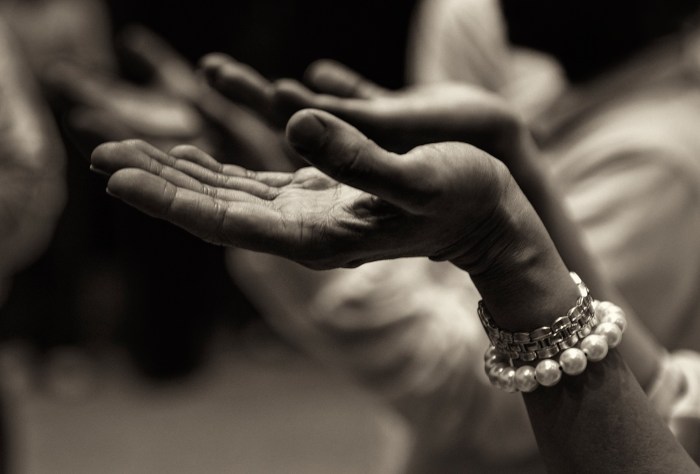
Looking for Clues

Photo by Matheus Bertelli from Pexels

If we are practicing our faith in order to grow spiritually and relationally with Him, we tend to look for clues about how best to do that. And frankly, there are dozens of books and workshops on this. Some of us try them and pick up a few good hints, but often those hints don’t stick very well. Of course, we plan to use them, but they get stuck on one of those “to do” lists and too often stay there rather than taking us deeper.

As we read in our Bibles, we see often that we are admonished to take charge of our thoughts and renew our minds as keys to a disciplined life of discipleship. Paul writes about this in many places:

We demolish arguments and every pretension that sets itself up against the knowledge of God, and we take captive every thought to make it obedient to Christ.”

2 Corinthians 10:5 (NIV)

“Do not conform to the pattern of this world but be transformed by the renewing of your mind. Then you will be able to test and approve what God’s will is–his good, pleasing and perfect will.”

Romans 12:2 (NIV)

These are good and helpful in guiding our decisions and training our thoughts, but even with practice they can get derailed because what is driving the engine inside of us is what we want at any given point in time and that is a heart issue first.

I was challenged to look at this when I read the following words by James K.A. Smith in You Are What You Love:

“What if, instead of starting from the assumption that human beings are thinking things, we started from the conviction that human beings are first and foremost lovers? What if you are defined not by what you know but by what you desire? What if the center and seat of the human person is found not in the heady regions of the intellect but in the gut-level regions of the heart?”

You would think we would just clearly “get” that wouldn’t you? No one ever asks us to invite Jesus into our heads, but always into our hearts. Somehow after that we start doing the thinking things and lose track of the reality that the battle is always going to be about our hearts.

dessert-ice-cream-summer-sweet-3631

Photo by JESHOOTS from Pexels

We can all think of examples that make that clear. One easy one is our commitment to lose those extra pounds and watch our intake of sugar and fats. We know what we need to do. We have committed to one program after another and made progress here and there, but too often we slip back. Why?  Because we want that ice cream sundae on these hot summer days and that want will very often win over what our head tells us to sacrifice.

That doesn’t mean we don’t use our “thinkers” to try to rein in our “wanters” that are not healthy for us, but if we think the thinking things are going to have an easy time of it we miss that the clue to success is having our hearts bent to a different want or desire.

What did Augustine say was key to our identity?

“You have made us for yourself, and our heart is restless until it rests in you.”

Smith’s book suggests this regarding what Augustine writes:

“The longing that Augustine describes is less like curiosity and more like hunger – less like an intellectual puzzle to be solved and more like a craving for sustenance.”

Image 7-25-20 at 1.24 PM
Photo by Rob Blair

I think the psalmist nails the idea in Psalm 42: 1-2 (NIV):

“As the deer pants for streams of water,     so my soul pants for you, my God. My soul thirsts for God, for the living God.     When can I go and meet with God?”

If we are honest with ourselves as we assess things, we can see how our wants and desires are what propels us forward. That is what it is crucial for the Lord to recalibrate our hearts so they long for Him and what He desires because He is the only one who can satisfy whether we realize that all the time or not.

“The center of gravity of the human person is located not in the intellect but in the heart. Why? Because the heart is the existential chamber of our love, and it is our loves that orient us toward some ultimate end or telos (goal). It’s not just that I “know” some end or “believe” in some telos. More than that, I long for some end. I want something and want it ultimately. It is my desires that define me. In short, you are what you love.”

James K.A. Smith in You Are What You Love

John Eldredge often writes about how God made us for intimacy and adventure. I love that concept because it brings us into the relational being of the Lord with us. If we miss that by being a “thinking thing” our attempt to take every thought captive will falter.

“Our heart will not totally forsake the intimacy and adventure we were made for and so we compromise. We both become, and take to ourselves, lovers that are less dangerous in their passion for life and the possible pain that comes with it – in short, lovers that are less wild.”

John Eldredge

And don’t mistake that the adversary, our enemy, knows the action to seduce is in the heart center as well. His lures are many and filled with all manner of sensual passionate yearnings that can take us down a path we did not intend.

So if you are looking for clues along the journey, be sure you keep inventory on your heart – its longings, desires, wants – that will give you a big boost in taking thoughts captive and renewing your heart. Otherwise, it can be a good exercise with little fruit at the end of it.

backlit-black-cross-161089

What Are You Practicing?

IMG_1573-preview
Two grandsons hard at work practicing on the beach – on vacation

Practicing?  Really?  Must I practice?

The word “practice” evokes memories in all of our minds – sitting at a piano or another musical instrument going over scales or pieces of music we have been assigned that are not at all what we had in mind when we started with an instrument. Other memories include practicing spelling words, mathematical facts, vocabulary, locations of continents, countries, oceans, and more on a map.

IMG_3808 (1)

But it doesn’t stop there. Our favorite sports that we seek to achieve great triumphs in start with the grunt work of practice, sometimes doing things that make no sense to us for the sport we are seeking to play. Some of the professions we train for are called “a practice.”

The word practice results in such a visceral response in us because of what it requires of us. We may want to play an instrument beautifully like we listen to on our favorite Spotify or Pandora channel or earn that scholarship for academic excellence, but practice demands we work at something repeatedly so we can improve toward the goal we have or the goal we have set for us. And frankly, that sounds like WORK…and it is.

IMG_2871

Practice requires we focus, hone in on something repeatedly, when much of the time our bent is to relax in whatever way suits us doing something we do easily or that is fun. Try not to label that in a negative way, but to see it as just what it is for most of us.

Why must we practice?

You and I can come up with a list of reasons, but it all boils down to what practice does to us beyond what we are actually doing. Practice trains and teaches us to develop some skill or attribute that we want or need to acquire. In the process, it develops a habit and habits shape who we are, who we become.

But wait – Paul talks about practice in his epistles as well. Here is one example:

“Isn’t it obvious that all runners on the racetrack keep on running to win, but only one receives the victor’s prize? Yet each one of you must run the race to be victorious.”

I Corinthians 9:24 (TPT)

IMG_1307

No, he doesn’t use the word practice, but if you have ever run a race of any kind you know you need a great deal of practice to be able to finish the race let alone win it. I got to see that when our daughter was training (practicing) running to increase her endurance for a 5K and then moved up to a half marathon and a 10 miler. A few verses later in that same chapter, Paul makes it clearer still:

“…but I train like a champion athlete. I subdue my body and get it under my control, so that after preaching the good news to others I myself won’t be disqualified.”

I Corinthians 9:27 (TPT)

Paul uses the word train in this verse and training always involves practice. I know that from a number of areas in my life from piano to sax to academics. I also know it from never being an athlete and realizing as I was getting older that I very much needed to strengthen my body to be able to improve flexibility, posture and more. I couldn’t accomplish that by walking every day, I needed a trainer to guide the path to the goal and hold me accountable. It was a decision I did not make lightly to hire one. It was going to cost me some dollars and also cost me commitment and a regimen of practice if I didn’t want to have my body crumble just through the natural aging process.

IMG_1548

Practice results in developing a habit so that over time we not only reach the goal, but we find it less hard to do.

Paul uses the metaphors about running a race often in his writing because he knows that training and practice in the spiritual realm does something that we need if we are to look like Christ. It develops virtue, a necessary character trait of disciples of Christ.

“…acquiring virtue takes practice. Such moral, kingdom-reflecting dispositions are inscribed into your character through rhythms and routines and rituals, enacted over and over again, that implant in you a disposition to an end (telos) that becomes a character trait – a sort of learned, second-nature default orientation that you tend toward “without thinking about it.” We’re not talking about biological hardwiring or natural instincts.

Virtues are learned and acquired, through imitation and practice. It’s like we have the moral muscles that are trained the same way our biological muscles are trained when we practice a golf swing or piano scales.”

James K.A. Smith

And the key is to remember this practice is not about trying to just acquire more knowledge, Jesus is always after one thing above all – our hearts. He wants our desires, longings, and yearnings to be ever toward Him because they will be what directs our behavior. It’s not about the law we memorize, but about our hearts that are transformed.

One of my favorite passages in scripture is Hebrews 12:1-3 that points me to my focus and The Message version makes it exceedingly plain:

“Do you see what this means—all these pioneers who blazed the way, all these veterans cheering us on? It means we’d better get on with it. Strip down, start running—and never quit! No extra spiritual fat, no parasitic sins. Keep your eyes on Jesus, who both began and finished this race we’re in. Study how he did it. Because he never lost sight of where he was headed—that exhilarating finish in and with God—he could put up with anything along the way: Cross, shame, whatever. And now he’s there, in the place of honor, right alongside God. When you find yourselves flagging in your faith, go over that story again, item by item, that long litany of hostility he plowed through. That will shoot adrenaline into your souls!”

Hebrews 12:1-3 (MSG)

What do you need to start practicing participating in the recalibration of your heart and development of virtue?

IMG_2362

Unplanned Imitation…Hmmm!

apps-blur-button-close-up-267350
Photo by Pixabay

If we learn so much from the very day we are born by imitating, how does that influence who we become and what shapes our hearts, our loves, our desires?

We have models that are clearly designed to help us imitate. They include our parents, other family members, teachers, coaches, clergy, and others. We look to them to point us in the best path. That may not be perfect, but we hope it will be at least good enough because these early examples will help us shape our desires and what we believe will be “good” for us in the many years ahead.

Why is this so crucial?  Here is the response by James K.A. Smith in his book You Are What You Love:

“You can’t not love. It’s why the heart is the seat and fulcrum of the human person, the engine that drives our existence. We are lovers first and foremost…we might say that the human heart is part compass and part internal guidance system.

The heart is like a multifunctional desire device that is part engine and part homing beacon. Operating under the hood of our consciousness, so to speak – our default autopilot – the longings of the heart both point us in the direction of a kingdom and propel us toward it.”

Then what causes the heart to look like Jeremiah describes it?

“The human heart is the most deceitful of all things,     and desperately wicked.     Who really knows how bad it is?”

Jeremiah 17:9 (NLT)

To understand what seems like a contradiction we need to recognize that our heart is bent toward what we love, what we want, and that has self written all over it from the beginning and can help us see what it is first and foremost our hearts that the Lord is after so He can transform them. Too many of our wants and desires, our hungers, are influenced by things our models did not intend many times. We caught things beyond things we were taught or encouraged to learn.

alone-autumn-beautiful-267039

We also don’t grow up in a vacuum, so we begin very early to want things we see others have that look good to us. Not long after that we start going about whatever we need to do to get them. We take a toy we want from a child we are playing with. We grab something to eat that we long for from someone else’s hand or plate. And that is just the beginning of leading our hearts down the primrose path, away from the best choices.

“To be human is to be animated and oriented by some vision of the good life, some picture of what we think counts as “flourishing.” And we want that. We crave it. We desire it. This is why our most fundamental mode of orientation to the world is love. We are oriented by our longings, directed by our desires. We adopt ways of life that are indexed to such visions of the good life, not usually because we “think through” our options, but because some picture captures our imagination.”

James K.A. Smith

Few of us would disagree that we are flooded with images, sounds, ideas, and concepts of what that will look like more than ever before. It is happening every moment of every day from the time we awaken until we go to sleep. These same things can impact our longings, hungers, and habits without our awareness.

When we consider that along with the tendency of our unsanctified hearts, Paul’s words in Romans 7 about doing the very thing he hates makes a great deal of sense and can resonate more than ever.

God is love and everything about Him emanates from that understanding and it is little wonder that as human image bearers we have love built into our DNA and it should not surprise us that the enemy of our souls competes for our desires and longings.

IMG_0782

It is also why when we sense God inviting us into relationship with Him that He sees this (as should we) as a heart decision. That decision is what invites Him into the process of transforming our hearts, our desires, our hungers and longings so they are reoriented toward what is truly good.

He understands what James K.A. Smith writes:

“While being human means we can’t not love something ultimate – some version of the kingdom – it doesn’t necessarily mean we love the right things, or the true King. God has created us for himself and our hearts are designed to find their end in him, yet many spend their days restlessly craving rival gods, frenetically pursuing rival kingdoms. The subconscious longings of our hearts are aimed and directed elsewhere; our orientation is askew; our erotic compass malfunctions, giving us false bearings.”

These things that we are influenced by not only affect our choices and what we do, they also do something to us. What our hearts cling to according to Martin Luther become what is our god.

It is any wonder that the writer of Proverbs reminds us of this wisdom:

“Keep your heart with all vigilance, for from it flow the springs of life.”

Proverbs 4:23 (ESV)

“No faith is so precious as that which lives and triumphs through adversity. Tested faith brings experience. You would never have believed your own weakness had you not needed to pass through trials. And you would never have known God’s strength had His strength not been needed to carry you through.”

Charles Spurgeon

God’s grace and tender mercies toward us begin with revealing the condition of our heart and his love points (as a compass or GPS) to a better path beyond any other examples or influences that seek to bend our hearts in a path toward things that will never satisfy – no matter how good they may appear.

bright-daylight-environment-2564121

Who Are You Imitating?

barefoot-beach-cheerful-1574653

You might be tempted to say you aren’t really imitating anyone given our tendency toward being individualistic, but before you respond on the question let’s consider it a bit more carefully.

From the time you were born you have been imitating, learning what things mean and how the world works. You have practiced what you learned for such a long time you rarely notice or think about these things because they are habitual and come from where they are stored in the unconscious.

Consider empathy as an example and how it develops from the writing of Maurice Wagner inThe Sensation of Being Somebody:

“Empathy begins to manifest itself in the infant’s behavior soon after he is born. It becomes the basis of nonverbal communication all through his life. Before the child is able to understand the language of his household, he senses the emotions of the people speaking to him. We see his responses and sense empathically that he understands. How much he understands is open to question. We know he enjoys being liked.”

That said, we also can see from the words of this theologian and psychologist that if we were not enjoyed or emotions in our home were loud or not evident to us, we can be left with gaps that impact us. These give us glimpses of what causes us to hunger for a “better.”

What direction that hunger takes can vary, but it will begin its influence very early for each of us. And we were, are, and will be surrounded with people and things pointing to what they believe will be the “better” or “the good life” that we seek.

In Attachments: Why You Love, Feel and Act the Way You Do by Dr. Tim Clinton and Dr. Gary Sibcy, they point out the following:

“The persistent human cry is simply for someone to love us, to hold us tight. Our need for relationship is even more powerful than our need for food.”

WOW!

adorable-baby-cute-64242

How we attach to our moms and dads at the outset will put us on a trajectory that is powerful indeed. But there is another factor that is key.

We were made in God’s image and as most of you would agree, God is love and He desires our love and that love be a hallmark of our character. Few messages in the Bible are repeated more often than the exhortation to love, love one another, love Him.

In a book I have been reading I was provoked to deeper thought when I read these lines:

“You can’t not love. It’s why the heart is the seat and fulcrum of the human person, the engine that drives our existence. We are lovers first and foremost. If we think about this in terms of the quest or journey metaphor, we might say that the human heart is part compass and part internal guidance system. The heart is like a multifunctional desire device that is part engine and part homing beacon.”

James K.A. Smith in You Are What You Love

 Our heart will long for love and will be bent toward loving something or someone. That doesn’t mean the choices will always be the best. What and who we imitate and then practice becomes habit and can begin to calibrate our heart in more than one direction.

academic-adult-architecture-159740

Jesus makes clear that our relationship with Him begins in our heart and He notes that the heart is also what needs to be transformed. If the influences of our family and culture bend our heart to search for things and people to love that are not like what He created us to long for, it will become a ruling passion pulling us into all manner of trouble.

Matthew quotes Jesus on this subject in Matthew 15:18-19 (NIV):

18 But the things that come out of a person’s mouth come from the heart, and these defile them. 19 For out of the heart come evil thoughts—murder, adultery, sexual immorality, theft, false testimony, slander.

Our hearts were originally designed and intended to love as God loves, but if they are not, we will be searching for it. Augustine wrote in Confessions, “Things which are not in their intended position are restless. Once they are in their ordered position, they are at rest.”

When we think about the exhortation to love, most of us will think about John’s Gospel and epistles, but Paul writes often on this subject as well. His fervency is clear in Colossians 3:12-14 (NIV):

“12 Therefore, as God’s chosen people, holy and dearly loved, clothe yourselves with compassion, kindness, humility, gentleness and patience. 13 Bear with each other and forgive one another if any of you has a grievance against someone. Forgive as the Lord forgave you. 14 And over all these virtues put on love, which binds them all together in perfect unity.”

When Paul talks about putting on love it sounds as if he is using a clothing metaphor. James K.A. Smith writes: “It’s like love is the big belt that pulls together the rest of the ensemble.”  I love that description.

If all this is true – and I believe it is – what makes loving as the Lord intended so complicated and often difficult to accomplish?

If you’re curious about that, check back in next time for some clues.

IMG_3591 (1)

Photo by Pam Ecrement

Calibration and Recalibration

man-in-black-jacket-and-black-knit-cap-inspecting-car-engine-3807277
Photo by Andrea Piacquadio from Pexels

When the Lord created humankind, he calibrated our hearts to be lovers above all else and to have that love aligned toward Him and his designs and desires for the Kingdom here on earth. But in the Garden of Eden when Adam and Eve yielded the ground of their hearts to Lucifer when he nudged the desires of their hearts for the forbidden fruit, the hearts of humankind got out of sync. The original calibration went amiss.

This loving what was from God should have been straightforward and easier, but from that day forward what we longed for and desired was always influenced by the choices made back then in Eden. The allure of many things could distract us from the best things, and they did. Our sin nature pulled at the threads of our subconscious.

The wants, longings and desires of our hearts are what impact everything we do and tend to determine the course we are on. It is the battleground that either helps or hinders the renewal of our minds. And since our loves can be pulled in so many directions from an array of influences (some recognized and others not), gaining more understanding about the ground we are to guard and protect is crucial.

medical-equipment-on-an-operation-room-3844581
Photo by Anna Shvets from Pexels

God knew that we needed a heart fix, a major heart adjustment to regain the clear recognition that He is love and we are made to be lovers of all things godly and good. When Jesus volunteered to come to earth in the flesh, one of the key purposes was to show us what love is, who He is and always was. He wanted to clarify what we wanted, sought, and yearned for as the crux of the matter. John showed us that in his Gospel when we saw Jesus ask the key question, “What are you seeking?

When sin had entered in back in Eden, the sacrifices humankind knew from the Old Testament had been an effort to find our way back to God, but the relationship was still damaged because the blood of bulls, lambs, goats, and doves did not change the heart. But there was one thing that could and that was what Jesus intended to do when He chose to lay down his life on the cross and then allow the Holy Spirit to come to speak to us in our hearts so our hearts could begin to be recalibrated to what God planned at the outset.

Calibration means to set or adjust something so it works as it was designed to work. If something is amiss from the original settings, then recalibration is needed.

The truth is that our hearts need to be recalibrated. The Lord’s love sacrifice at Calvary opened the door for us if we have invited Him into our hearts, but life is still tricky and our adversary stays busy with his old tricks trying to lure us to love other things and distract us from the path our hearts are to take.

“While being human means we can’t not love something ultimate – some version of the kingdom – it doesn’t mean we necessarily love the right things, or the true King. God has created us for himself and our hearts are designed to find their end in him, yet many spend their days restlessly craving rival gods, frenetically pursuing rival kingdoms. The subconscious longings of our hearts are aimed and directed elsewhere; our orientation is askew; our erotic compass malfunctions, giving us false bearings.”

James K.A. Smith

Those subconscious things have often been there for a long time and they have taken ground because we practiced them as habits, we sought to satisfy longings. What we didn’t recognize at the time was that those things we were doing were also doing something to us and it wasn’t going to be easy to stop doing them. In truth they were affecting what we worshipped as they became idols we yielded to again and again.

rsz_1photography-of-person-walking-on-road-1236701

Even as believers at the outset those old subconscious yearnings were not totally tamed, and they would haunt us and track us hoping we would yield. When we tried to think our way through the challenge, we could sometimes see what happened but that didn’t totally quell the heart’s old tastes.

Worship as a path to recalibration is a key tool because we don’t think our way toward worshipping God.

James K.A. Smith clarifies why worship is essential to the task:

“A more holistic response is to intentionally recalibrate the unconscious, to worship well, to immerse ourselves in liturgies that are indexed to the kingdom of God precisely so that even our unconscious desires and longings – the affective, under-the-hood ways we intend the world – are indexed to God and what God wants for his world.

The practices of Christian worship train our love – they are practice for the coming kingdom, habituating us as citizens of the kingdom of God.”

From You Are What You Love

I think Paul understood a great deal about what was needed to recalibrate our hearts. Listen to what he said to the church at Colossae:

“15 Let your heart be always guided by the peace of the Anointed One, who called you to peace as part of his one body. And always be thankful.

16 Let the word of Christ live in you richly, flooding you with all wisdom. Apply the Scriptures as you teach and instruct one another with the Psalms, and with festive praises, and with prophetic songs given to you spontaneously by the Spirit, so sing to God with all your hearts!”

Colossians 3:15-16 (TPT)

Smith echoes that when he writes:

“The orientation of the heart happens from the bottom up, through the formation of our habits of desire. Learning to love (God) takes practice.”

close-up-of-hands-257037-2
Photo by Pixabay from Pexels